A gravel drive or pathway usually looks tidy right up to the point the weeds start showing through. Then it can go from smart to scruffy surprisingly quickly, especially in spring and summer when growth picks up fast.
The good news is that if you want to know how to stop weeds coming through gravel, the answer is rarely one single fix. In most cases, it comes down to getting the base right, dealing with existing growth properly, and keeping on top of light maintenance before it turns into a bigger job.
Why weeds keep coming back through gravel
A lot of people assume weeds are always pushing up from underneath. Sometimes they are, but very often the problem is happening on the surface. Dust, soil, fallen leaves and other organic matter settle between the stones, and that creates enough growing material for wind-blown seeds to take hold.
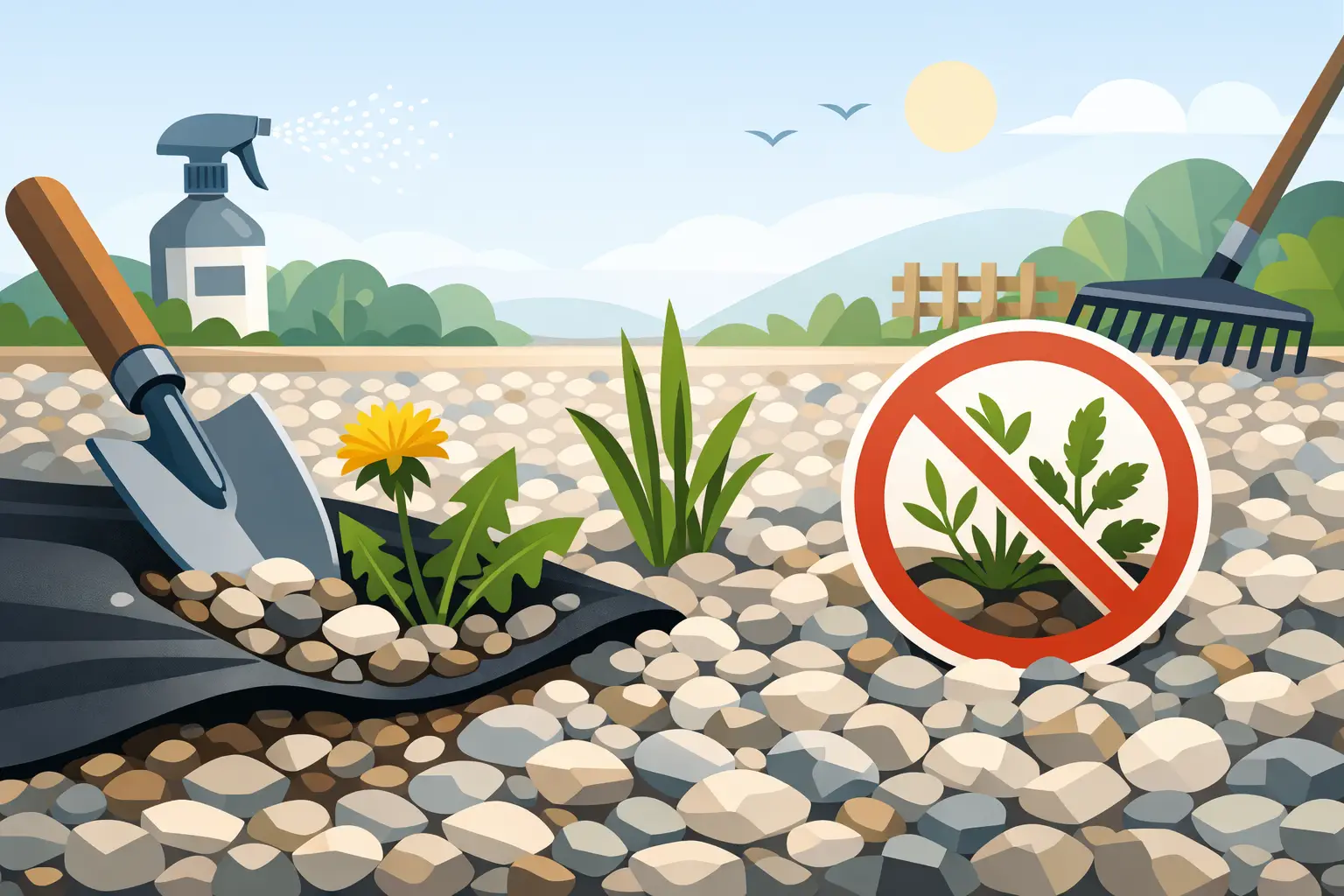
That means even a gravel area with a membrane underneath can still end up full of weeds if it is not maintained. A membrane helps, but it is not a permanent guarantee. Once debris builds up on top, weeds can root into that layer rather than the ground below.
There is also the issue of thin gravel coverage. If the stone is too shallow, sunlight reaches the soil more easily and weeds have less to fight through. In older gravel areas, the stone often spreads, sinks, or gets kicked aside over time, leaving bare patches where growth starts.
How to stop weeds coming through gravel from the start
If you are laying a new gravel area, this is the best point to prevent future problems. A poor base nearly always means more weeding later.
Start with a full clear-out
Before any membrane or fresh gravel goes down, remove existing weeds properly. If there are perennial weeds such as couch grass, bindweed or horsetail, simply covering them may not solve the problem. Some will push through weak points, edges or joins, and some will reappear around the perimeter.
The area needs clearing back to bare ground, with roots removed as far as practical. On heavily infested patches, a suitable weed treatment may be needed before laying anything new. The right approach depends on what is growing and how established it is.
Use a proper weed membrane
If you are asking how to stop weeds coming through gravel, a good quality permeable weed membrane is one of the most useful parts of the job. It allows water through while reducing the chance of weeds growing up from below.
Cheap, thin sheet material tends to tear, shift, or break down sooner. A heavier-duty landscape fabric generally lasts better, especially on driveways or areas with regular foot traffic. The membrane should be laid flat, overlapped properly at the joins, and pinned securely so it stays in place while the gravel goes down.
That said, membrane is a help, not magic. It reduces weed growth, but it will not stop seeds germinating in surface debris later on.
Get the gravel depth right
Gravel needs enough depth to cover the membrane properly and create a stable finish. Too little stone and the membrane becomes exposed, the area looks patchy, and weeds get a better chance.
For many paths and decorative areas, around 40 to 50mm of gravel is common. Drives may need a more suitable build-up depending on use, with the sub-base mattering just as much as the top layer. The exact depth can vary with the stone size and the purpose of the area, but skimpy coverage usually causes trouble.
Install tidy edging
Edging is often overlooked, but it makes a real difference. It helps keep the gravel where it belongs and reduces soil washing in from borders and lawns. Without clear edges, earth creeps into the stone, grass spreads sideways, and weeds get a foothold.
Metal, brick, timber or stone edging can all work if fitted properly. The best option depends on the style of the property and how much wear the area gets.
What to do if weeds are already coming through gravel
For existing gravel, the best method depends on how bad the problem is. A few scattered weeds need one approach. A neglected drive full of moss, grass and broadleaf weeds usually needs more than a quick spray.
Remove heavy growth first
If weeds are tall and established, clear the bulk of the growth before doing anything else. Pulling or hoeing can help remove surface weeds and make the area easier to treat. It also stops dead growth sitting in the gravel and adding more organic matter.
Be aware that hand-pulling works better on some weeds than others. Shallow-rooted annual weeds often come out quite easily. Deep-rooted weeds can snap off, leaving roots behind to regrow.
Treat persistent weeds properly
Where weeds are recurring across a larger gravel area, a targeted weed treatment is often the most practical option. This is especially true on drives, parking areas and long paths where hand weeding every week is not realistic.
Timing matters. Treatments tend to work best when weeds are actively growing, dry enough to absorb the product, and not due for immediate rain. They are less effective when growth is very stressed or when temperatures are poor.
If the gravel sits near lawns, borders or planted areas, care is needed to avoid drift or contact with desirable plants. That is one reason some property owners prefer to have weed control carried out professionally, particularly on larger sites.
Rake out built-up debris
This is one of the most overlooked steps. If a gravel area has a layer of soil, leaves, moss and general muck sitting in it, weeds will keep returning no matter how often they are removed.
Raking through the gravel helps loosen debris so it can be collected and taken away. On some older areas, the top layer may be so contaminated that topping up alone is not enough. In those cases, the gravel may need lifting, cleaning or partly replacing to reset the surface.
Top up thin areas
Once the weeds and debris are dealt with, look at the stone depth. If the gravel has become patchy or shallow, fresh stone can help suppress regrowth and improve the overall finish. It also makes ongoing maintenance easier because there are fewer exposed spots for weeds to establish.
Try to match the existing gravel as closely as possible in size and colour if appearance matters. Mixing very different materials can leave the area looking uneven.
Ongoing maintenance makes the biggest difference
Even a well-laid gravel area benefits from regular upkeep. If you leave it untouched for months, seeds, moss and debris start building up again.
A light rake every so often helps keep the stones moving and stops compacted surface material forming between them. Sweeping or blowing off fallen leaves in autumn also helps, because once they break down they create ideal conditions for germination.
Small weeds are far easier to deal with than established ones. If you spot growth early, it usually takes far less work to get the area back under control. Leave it until the gravel is covered and the job becomes slower, messier and often more expensive.
For landlords and commercial sites, regular grounds maintenance is often the simplest answer. Gravel areas tend to be forgotten until they look untidy, but they affect the overall presentation of the property just as much as lawns, hedges and borders.
When membrane alone is not enough
People often ask whether laying membrane under existing gravel will solve everything. Sometimes it helps, but only if the area is properly stripped back first. Putting membrane over a weedy, debris-filled surface and adding a bit more gravel on top usually leads to the same problem returning.
If the base is poor, the edges are contaminated with soil, or the gravel is too far gone, a fuller refresh may be the better option. That can mean removing the old stone, clearing the ground, fitting membrane correctly and relaying the area. It is more work up front, but in some cases it saves repeated patch repairs later.
Knowing when to get help
A small gravel path can often be managed with occasional hand weeding and a top-up of stone. A long driveway, shared access, rental property or commercial frontage is different. Once weeds are widespread, keeping it tidy can take more time than people expect.
If you need the area brought back into shape and kept that way, practical maintenance support often makes more sense than tackling it in bits. At Mossy Meadow, we help property owners across Wiltshire with weed control and routine outdoor upkeep, whether it is a one-off tidy-up or part of regular grounds maintenance.
Gravel will never be completely maintenance-free, but it should not look overrun either. Get the base right, keep surface debris down, and deal with new growth early – that is what keeps a gravel area looking presentable for the long term.