A lawn can be freshly cut and still look unfinished. The giveaway is nearly always the edges – grass creeping into beds, borders blurring into paths, and weeds settling into the soft line where two surfaces meet. If you want a garden to look consistently tidy (not just “done for the day”), border maintenance and edging are the jobs that carry the look week after week.
The good news is that edging is straightforward once you understand what you are trying to achieve: a clean, deliberate boundary that stays put. The less good news is that it is also one of the quickest areas to slip when time, weather, or mobility get in the way. Below is how to keep borders sharp, what tends to go wrong in Wiltshire gardens, and when it makes sense to bring in help.
What “border maintenance and edging” actually includes
Edging is the visible cut line between lawn and something else – a flower bed, shrub border, gravel, a path, a driveway edge, or even a verge. Border maintenance is the broader work that keeps that boundary clear: controlling weeds, preventing plants from flopping over, keeping mulch or gravel where it should be, and stopping grass from re-invading.
In practice, you are usually dealing with three things at once. First, grass wants to spread sideways, especially during warm, damp spells. Second, soil and mulch migrate with rain and foot traffic, gradually softening any crisp line. Third, weeds exploit every gap created by that movement. A neat edge is the result of regular, small interventions rather than one big “garden day” every few months.
Why edges fail (and why it matters)
Most edges fail for predictable reasons. Lawns are often cut more frequently than borders are maintained, so the grass looks good while the boundary slowly collapses. Add in compacted ground from winter, spring growth spurts, and the reality that edging is fiddly work, and you end up with a garden that feels scruffy even if the plants are healthy.
It matters because edges do a lot of visual heavy lifting. They frame beds, make paths look straighter, and stop a garden looking like it is closing in on itself. For landlords and property managers, a clean edge is also a simple way to keep outdoor areas presentable between tenancies or site visits. For commercial sites, it is often the difference between “maintained” and “unmanaged” at first glance.
Choosing the right edge for your garden
There is no single best edge. The right approach depends on how the space is used and how often it is likely to be maintained.
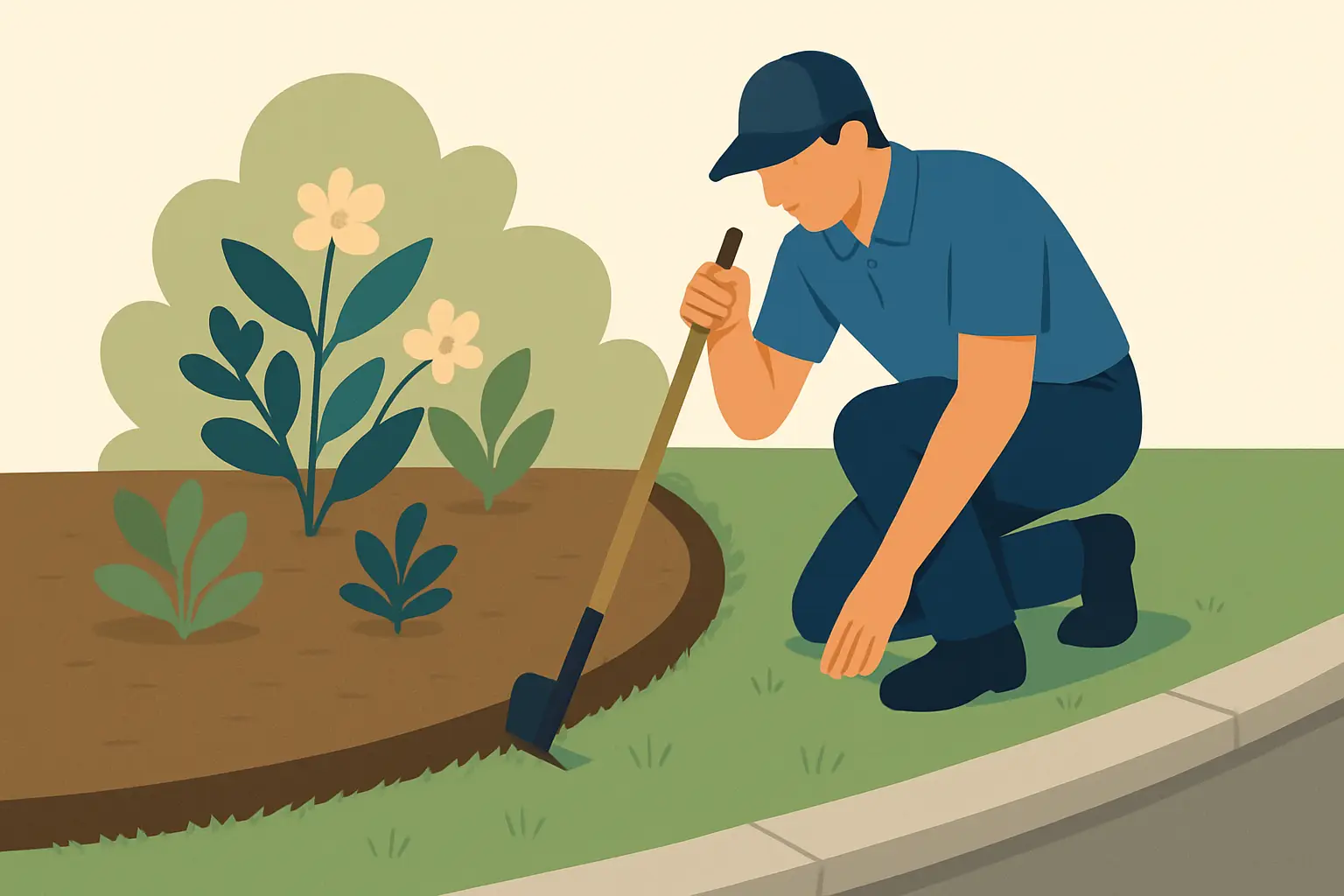
A cut turf edge (where the lawn is trimmed back and the soil line is exposed) looks smart and natural. It suits borders where you want a soft, traditional finish. The trade-off is that it needs touching up, particularly in summer, because grass will creep back.
A physical barrier edge (metal, plastic, brick, stone, sleepers) can hold shape for longer and reduce grass invasion. This can be helpful where you have gravel paths, bark mulch, or beds that get walked along. The trade-off is installation cost and the fact that barriers can look untidy if they shift, heave in frost, or become buried under soil.
A mowing strip or hard edge (paving set flush to the lawn) is practical because you can run the mower wheel along it and reduce trimming time. It is a good choice for busy households and commercial properties. The trade-off is that it is a more permanent change and may not suit every garden layout.
If you are not sure, look at where the mess happens first. If gravel is constantly migrating into the lawn, a firmer barrier usually helps. If borders are mainly suffering from grass creep, a regular cut edge plus consistent trimming might be enough.
The timing that keeps edges crisp
Edging is easiest when the ground is workable but not waterlogged. In Wiltshire, late spring through early autumn is ideal for frequent light touch-ups, with a more thorough edge re-cut in spring and again in late summer if needed.
During peak growing season, edging can be a quick add-on to mowing. Leaving it too long means the edge thickens and you end up having to remove more turf in one go, which can leave the lawn looking scalped and uneven.
Winter is different. Growth slows, but damage risk increases because wet ground crumbles and footprints can deform the line. Winter is often better spent on clearing leaves, reducing beds that have flopped, and planning a spring reset rather than trying to force a perfect edge in poor conditions.
Tools and technique: what makes the difference
A tidy edge is mostly about clean cutting and consistent height. The tool you choose depends on the type of edge and how overgrown it is.
For lawn-to-border edges, a half-moon edging iron gives a crisp vertical cut. The key is to keep the blade straight and take small bites, rather than hacking. For long runs, it is easier to work in short sections and step back regularly to check the line.
For lawn-to-path edges and around obstacles, a strimmer can be quicker, but it is also where mistakes happen. If the strimmer is angled too low, it scalps the lawn and sprays soil onto paving. If it is too high, it leaves a fuzzy fringe that immediately looks untidy. A steady, controlled pass is better than trying to “tidy it all” in one aggressive sweep.
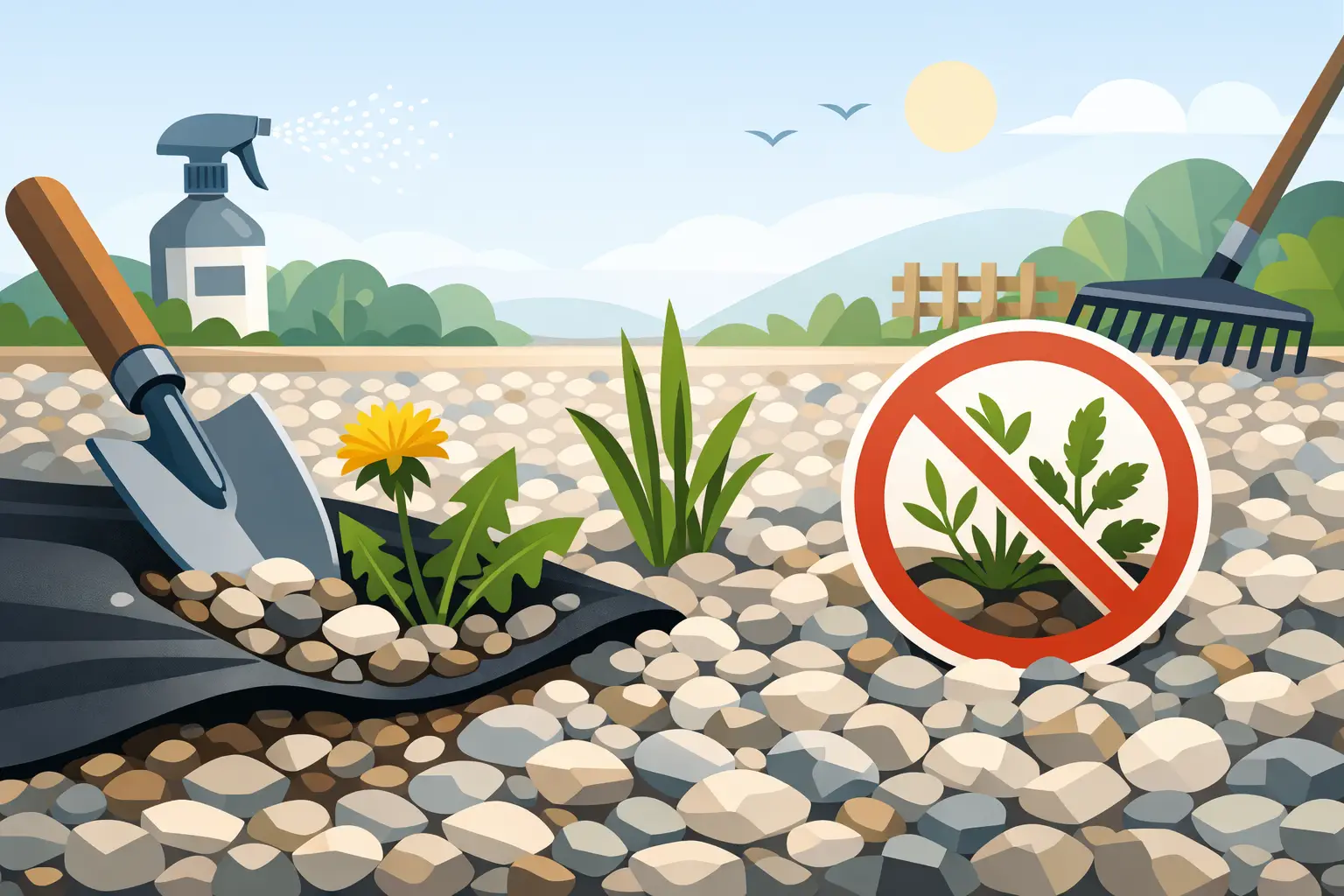
For weedy edges, do not rely on cutting alone. If you trim weeds to ground level without removing or treating them, they return quickly and the edge looks rough again within days. The most reliable result comes from combining a clean cut with targeted weed control and, where needed, topping up mulch to reduce new germination.
Border maintenance that supports the edge
Edging only stays sharp if the border behind it is kept in check.
If plants spill over the edge, you will constantly be trimming around them, and the line will never look clean. Many borders benefit from regular light pruning to keep growth within the bed, especially fast growers and ground cover that likes to wander.
Mulch is another quiet helper. A fresh layer of bark or composted mulch in spring can suppress weeds and reduce soil splash onto lawns and paths. But it needs to be applied properly. If mulch is piled right up to the edge and then kicked onto the lawn by mowing, you lose the crisp line. Keeping a small, deliberate gap between mulch and turf can make edging look sharper and stop materials migrating.
Weed pressure is often highest right at the boundary. That is where moisture collects and where mowing cannot reach. Regular weeding or a planned weed control visit makes edging far less of a battle.
Common problem areas (and what to do about them)
Some spots always seem to look messy first.
Around curved beds, the line can wobble if it is trimmed freehand. A gentle curve looks best when it is consistent. If you are reshaping, do it in stages over a couple of visits rather than trying to create a new curve in one go.
Along fences and walls, grass and weeds hide where mowers cannot reach. This is where strimming and weed control matter most, and where clippings build up. Clearing clippings after trimming keeps the area looking clean and reduces the chance of rot or staining.
Under shrubs, edges disappear because leaf litter and low branches hide the boundary. Lifting the canopy slightly and removing built-up debris can reveal the edge again. If shrubs have outgrown the bed entirely, selective reduction or removal can bring the space back under control.
Where lawns meet gravel, the problem is usually migration in both directions. A firmer edging solution or a deeper gravel depth can help, but only if it is maintained. Even the best edge will look untidy if weeds are allowed to seed into the gravel.
One-off tidy-up or a regular schedule?
This is where it depends on your priorities.
A one-off visit can reset a garden quickly if edges have been ignored, borders are overgrown, and you need the place looking presentable for a letting, a sale, an event, or simply because it has got away from you. The trade-off is that the crisp look will fade if there is no follow-up, especially in summer.
A regular maintenance schedule spreads the work out and keeps the garden looking consistent. It is usually more cost-effective over the season because you are doing light trimming and small corrections rather than repeated “rescues”. This suits busy households, older residents who want the garden kept neat without heavy lifting, and commercial sites where standards need to be predictable.
When to bring in a maintenance team
If edging is physically hard, time-consuming, or you are struggling with green waste disposal, it often makes sense to outsource. Professional maintenance is also helpful when the issue is not just the edge but what is happening behind it – shrubs that need reducing, weeds that keep returning, or borders that need a proper seasonal clean-up.
A good maintenance visit should leave you with a clear boundary, controlled growth, and the waste removed. It should also be honest about what will and will not hold without repeat visits. If grass has invaded deep into borders, for example, it may take a reset now and a follow-up in a few weeks to keep it tight.
If you are in Wiltshire and want a straightforward, quote-driven approach to keeping things tidy, Mossy Meadow provides ongoing grounds maintenance including edging, border maintenance, weed control and green waste removal, with one-off or regular visits depending on what your garden needs.
Getting a “kept” look, not just a cut lawn
The most presentable gardens are rarely the most complicated. They are the ones where the boundaries are clear, the borders are contained, and the maintenance is consistent enough that nothing gets the chance to sprawl.
If you only have energy for one improvement this month, choose the edges you see most – along the main path, around the lawn’s front curve, or beside the drive. A clean line there makes the whole space feel looked after, even if the rest of the garden is still a work in progress.
A tidy edge is a small detail that changes how the entire property reads from the gate. Keep it simple, keep it repeatable, and let the garden look like someone is on top of it – because that is what everyone notices.