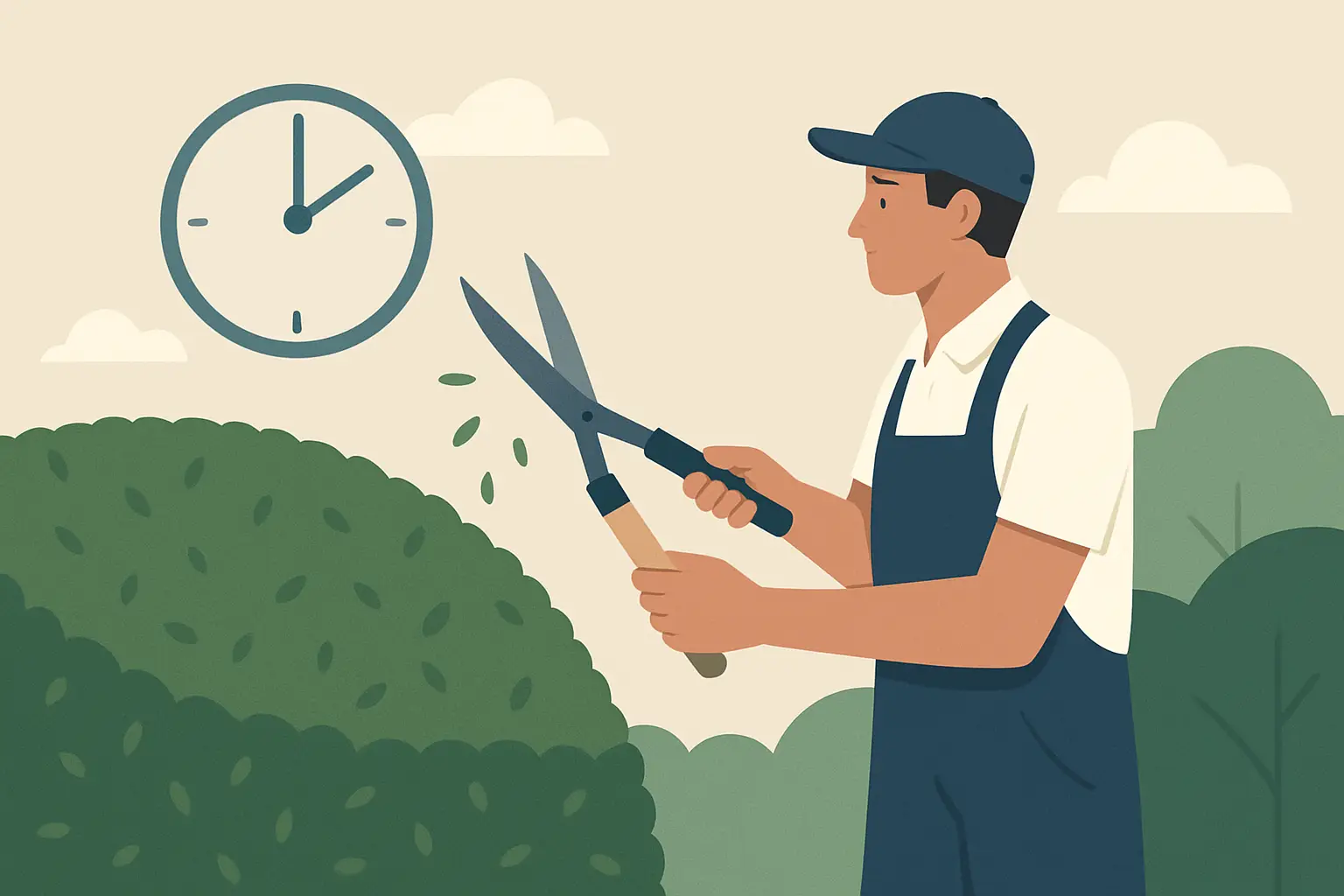
A hedge can look fine for months, then suddenly it is eating the path, brushing the car wing mirror, and blocking light into the front room. That is usually when people ask the question: how often should I cut my hedge – and can I get away with leaving it a bit longer?
The honest answer is that it depends on what the hedge is made of, how formal you want it to look, and what sort of growth you get on your site. But there are reliable timings that work for most gardens in Wiltshire, and a few clear warning signs that you are about to turn a quick trim into a bigger reduction job.
How often should I cut my hedge in the UK?
For most established hedges, a sensible baseline is one to three cuts a year.
If you want a crisp, tidy outline (especially on a front boundary), you are usually looking at two cuts per year. If you are happy with a softer, more natural look, one cut can be enough. If you have a fast-growing hedge and you want it kept very sharp, three lighter cuts can be the easiest way to stay on top of it.
The trap is leaving it until it is visibly overgrown. At that point, you are not trimming, you are reducing – which is slower, creates more waste, and can be harder on the plant if done at the wrong time.
The simple schedule most properties follow
Late spring to early summer: the main tidy-up
For many hedges, the first proper cut lands around late May through June. You are taking off the fresh growth and bringing the sides back so paths, drives, and borders stay usable.
If your hedge is a formal feature (straight lines, clean edges), this first cut is the one that sets the shape for the year.
Late summer: keep it neat going into autumn
A second cut in late August or September keeps the hedge looking presentable and stops it from putting on bulky growth right before winter. It also helps with visibility on corners, gateways, and parking areas.
This is often the cut that landlords and property managers prefer, because it holds things together visually through autumn viewings and into winter.
Winter: usually no cutting, but sometimes a reduction
Most routine hedge cutting slows right down in winter. Growth is minimal and the hedge is more vulnerable to stress. That said, winter can be the right time for bigger structural work on certain deciduous hedges and for planning reductions, because you can see the framework and access is easier without soft new growth.
Hedge type matters more than people expect
Fast-growing evergreen hedges (leylandii, laurel)
These are the ones that surprise people. They can look manageable in April and feel out of control by July.
As a rough rule, leylandii often needs two to three cuts a year if you want it kept tight. Laurel typically needs one to two, depending on how hard you cut and how much you let it thicken.
With these hedges, regular lighter trims are usually kinder than letting it go and then taking a lot off in one hit. If you cut back beyond the green growth into old brown wood, recovery can be slow – and for some conifers, it may not recover neatly at all.
Traditional mixed or flowering hedges (hawthorn, blackthorn, privet)
A mixed hedge often looks best with one cut a year, sometimes two if you want a more controlled line. Hawthorn and blackthorn can be managed annually once established, but if you want berries for wildlife or a more natural look, you may choose to cut less often.
Privet is a bit of an in-between. It can be kept very formal, but it will ask for more frequent trims when it is growing strongly.
Beech and hornbeam
These hedges are popular because they look smart and can be kept dense. Many people aim for one main cut in late summer. Some properties do a light early summer cut as well to keep the outline sharp.
If you cut beech and hornbeam too early, you can end up chasing regrowth through the season. If you cut too late, you risk going into cold weather with fresh cuts.
Box and small-leaved formal hedging
Small formal hedges usually need at least one careful cut, and often two, because every bit of growth shows. The key is not just frequency, but clean cutting and good access, so you do not tear leaves or leave ragged edges.
If your box is under stress or showing thinning, it is worth being cautious with timing and how hard you cut.
What changes the frequency on your property
Growth rate is affected by more than the calendar.
If your hedge is in full sun, sits on good soil, and gets plenty of moisture, it will push growth faster. If it is shaded or the ground is dry and thin, it may need less attention. Newly planted hedges can also be deceptive – some need formative trimming to thicken up, while others should be left to establish before heavy cutting.
Your desired finish matters too. A commercial site entrance, a holiday let, or a front garden facing the street usually benefits from a cleaner, more regular cut. A back boundary hedge that is mainly for privacy can often be on a simpler yearly cycle.
Bird nesting and timing: what to do in practice
People worry about nesting season, and rightly so. In the UK, birds can nest across spring and summer. The practical approach is to check before cutting and avoid work where nesting is active.
If you have a hedge that must be kept in check (for access, sight lines, or neighbours), the safest routine is often an early tidy before the main nesting activity ramps up, then a later cut towards the end of summer. Every hedge and year is different, so a quick visual check makes a big difference.
Signs you have left it too long
If you are not sure whether it is time, these are the situations where a routine trim is turning into a bigger job:
- You cannot walk a path without brushing against the hedge, or the hedge is narrowing the drive.
- The base is getting thin because the top has thickened and is shading it.
- You have to cut large woody stems rather than mostly soft green growth.
- The hedge has become uneven, with one side bulging where it gets more light.
Leaving it too long tends to create more waste, more time on ladders, and a less even finish.
Trimming vs reduction vs removal
It helps to be clear about what you need, because the right frequency depends on the job type.
A trim is regular maintenance. You are taking off the season’s growth to keep shape and size.
A reduction is corrective. You are bringing the hedge back to a smaller height or width because it has crept out over time. Reductions are perfectly doable, but they are more involved, and timing matters more.
Removal is sometimes the practical option when a hedge has become too large to manage safely, is damaging fences, or is no longer fit for purpose. In those cases, the frequency question is really about what replaces it and how much ongoing maintenance you want.
A workable plan for most Wiltshire gardens
If you want a straightforward answer you can put in the diary, this is the pattern that suits many properties we see locally:
A front hedge: cut twice a year (early summer and late summer) to keep it looking sharp.
A back boundary hedge: cut once a year (late summer) unless it is a fast grower.
A fast-growing evergreen screen: plan on two cuts as standard, with a third light tidy in mid-summer if it is getting away from you.
If your hedge has not been touched for a few years, plan for a reduction rather than a trim, and expect more waste and time on site.
Getting the timing right without the hassle
A lot of hedge cutting problems come down to logistics. You need the right kit, safe access, time to clear up, and somewhere for all the green waste to go. And if you leave it until the hedge is pushing into walkways, it becomes urgent – which is never the cheapest or easiest time to deal with it.
For homeowners, landlords, and site managers, a regular schedule avoids the “big annual battle” and keeps the place looking consistently cared for. If you would rather not store equipment or deal with the cuttings, Mossy Meadow can quote for one-off visits or a recurring maintenance plan across Wiltshire, including hedge cutting, reductions, and green waste removal – see https://Mossymeadow.co.uk.
The most reliable approach is the one you can stick to. Put the first cut in your calendar, keep the second one flexible based on growth, and aim to never let a simple trim turn into an avoidable reduction job. Your hedge – and your weekends – will be better for it.