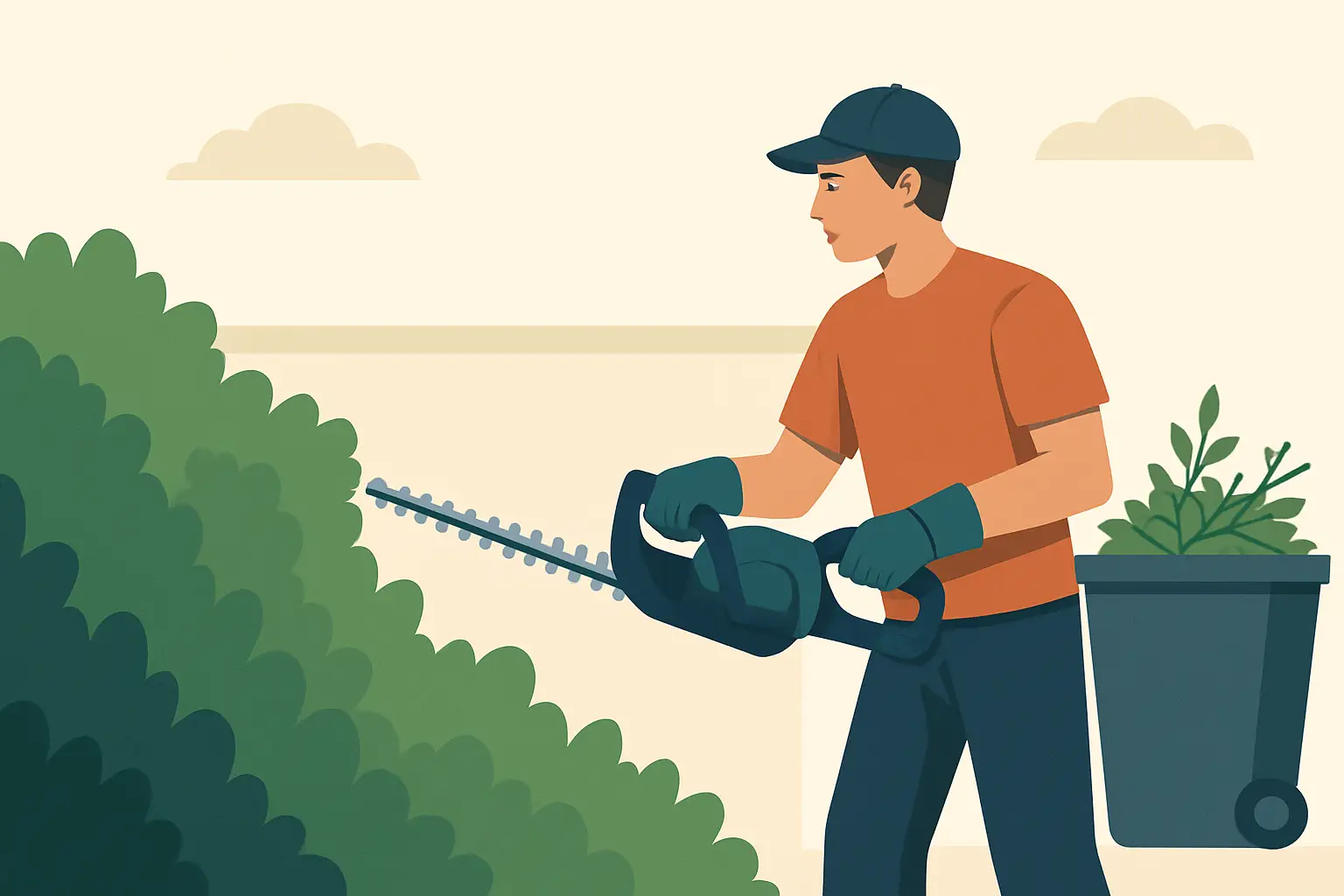
That hedge that looked “fine for now” can turn into a real problem surprisingly quickly. It blocks light, crowds a path, pushes through fencing, drops endless clippings, and makes the whole garden feel tighter than it needs to. When trimming stops being enough, hedge removal and disposal is the clean reset that gives you space back – but it is also one of those jobs that can go wrong if it is rushed.
This is a practical look at what the work involves, what affects price and timing, how disposal actually works, and when it is worth getting help rather than wrestling it yourself.
When hedge cutting stops working
Sometimes a hedge just needs reducing and a tidy. Other times, it is past the point where cutting is worth paying for year after year.
Removal is usually the right call when the hedge has outgrown the boundary, you cannot keep it at a sensible height, or it is swallowing up a driveway or footpath. It also makes sense when the hedge is thin at the bottom and leggy at the top – you can cut it back hard, but you might be waiting years for it to fill out again.
There are also practical property reasons. Landlords often remove problem hedges because regular cutting becomes a recurring dispute with tenants. Commercial sites sometimes remove them to improve sight lines for vehicles and pedestrians, or to reduce maintenance visits and keep standards consistent.
What hedge removal and disposal actually includes
A proper removal is more than cutting it down to ground level. The “right” scope depends on what you plan to do with the area afterwards.
At the simplest end, the hedge is cut down, brash is cleared, and the area is left level enough to mow around. This works well if you want an open edge and you are happy for some regrowth risk, especially with vigorous species.
If you want the hedge gone so you can re-fence, replant, pave, or create a new border, you normally need the stumps dealt with too. Stumps can be cut low and treated, ground out with a stump grinder, or dug out by hand or machine depending on access. Grinding is often the neatest option where access allows, because it removes the bulk of the root crown without tearing the garden up.
Disposal is a job in its own right. A mature hedge can produce an astonishing amount of green waste, and it is rarely something you can just “fit in the bin over a few weeks”. Good hedge removal and disposal means taking away the woody stems and leafy material, leaving paths and drives clean, and avoiding piles that sit around attracting pests or becoming a slip hazard.
The main factors that affect cost and time
Hedge removal looks straightforward until you start pricing up the labour, equipment, and disposal. These are the factors that typically change the quote:
Height, thickness, and length
A 1.2 metre hedge you can reach from the ground is a very different job from a 3 metre boundary hedge with thick trunks. Thickness matters as much as height. If the stems are more like small trees, cutting and handling takes longer and the waste is heavier.
Species and growth habit
Leylandii, laurel, hawthorn, privet, yew – they all behave differently. Some cut easily but bulk up the waste quickly. Some are slow to cut but produce heavier timber. Some regrow aggressively from stumps if not treated or removed.
Access and working space
Can you get along the hedge safely with tools? Is there room to drop sections as they are cut? Can a chipper or stump grinder get close, or does everything have to be carried through a side passage? Tight access usually means more time on handling and clearing.
What you want left behind
If you want the ground ready for turfing, planting, or a fence line, you are likely looking at stump work and levelling. If you just want the hedge reduced to a manageable edge and you will monitor any regrowth, the scope can be lighter.
Waste volume and disposal route
Green waste charges are real costs, and woody material adds weight and volume. If you are arranging removal, it is worth confirming what is included – not just the cut-down, but the take-away.
Permissions, boundaries, and the awkward bits people forget
Most hedge removals are straightforward, but there are a few checks that can save you trouble.
If the hedge sits on a boundary, make sure you are clear on ownership before removal. Cutting back to the boundary is one thing; removing a shared boundary hedge is another. For landlords and property managers, it is worth documenting the change, especially if the hedge contributes to screening between units.
For protected trees, different rules may apply. A hedge is not automatically exempt just because it is “a hedge”. If it includes trees or sits in a conservation area, you may need to check with the local authority before significant work. If you are unsure, ask – it is far easier than dealing with a complaint afterwards.
Finally, think about nesting birds. Hedge work is often best planned outside peak nesting season. If there is active nesting, work should stop and be rescheduled. A good maintenance contractor will flag this on arrival if it is not visible during quoting.
Disposal options: what is realistic for most properties
For small, light cuttings, your garden waste bin might cope. For a full removal, it usually will not.
You can compost some of the leafy material, but woody stems take a long time to break down and will overwhelm most home composters. Hiring a skip sounds tempting, but many skips are not suitable for green waste unless arranged specifically, and you still have the physical job of breaking everything down and loading it.
Chipping can reduce volume dramatically, but chippings still need a home. They can be used as a mulch on borders if you have space and you are happy with the look. If not, they still need removing.
For many homeowners, the simplest route is to have the hedge taken away as part of the job. That means the site is left tidy on the day, and you do not spend weeks trying to shift bags of cuttings in the car.
DIY vs bringing in a maintenance team
It depends on the hedge and your situation.
DIY can work if the hedge is short, access is easy, and you are comfortable with cutting tools and lifting. Even then, disposal is usually what turns it into a drawn-out project. The time cost is often underestimated, especially if you need multiple tip runs.
Bringing in a hands-on maintenance team is sensible when the hedge is tall, close to a pavement, next to a conservatory, or growing through wire and fencing. It is also the better option when you want stumps dealt with properly, because grinding and removal needs specific equipment and experience.
There is also a safety angle. Working at height with hedge trimmers or chainsaws, or cutting heavy sections that can swing or drop unpredictably, is not the place to “have a go” if you do not do it regularly.
What a good job looks like on the day
A well-run removal feels controlled rather than chaotic. Sections are taken down in a planned way, waste is kept managed as the work progresses, and paths are not left covered in spikes and leaves.
You should expect clear communication about what is being removed and what is staying. If there are surprises – hidden wire, old posts, concrete edging, or a change in ground levels – a good contractor will explain the options rather than pushing on and leaving a mess.
The finish matters. Even if you are replanting later, you do not want jagged stumps, torn turf, or piles of debris left behind “for you to sort”. Hedge removal and disposal is only really complete when the garden is usable again.
Planning what comes next
Removing a hedge creates a gap, and that is usually the point. But it helps to decide what you want the space to do.
If privacy is the reason you had the hedge in the first place, you might replace it with fencing, a trellis line, or a smaller, easier-to-maintain planting scheme. If light is the goal, consider keeping any replacement low and set back from the boundary so it does not become the same issue again.
If you are opening up a driveway or entrance, think about sight lines. A tidy, lower border with regular maintenance often looks sharper than a tall hedge, and it is easier to keep consistent.
Booking the work in Wiltshire
If you are in Wiltshire and want the job handled end to end, it is worth choosing a contractor that already provides ongoing grounds maintenance, not just one-off clearance. Hedge removal is often the start of a longer plan: keeping new growth in check, managing borders, sorting weeds that appear once light hits the ground again, and keeping the property looking smart month after month.
Mossy Meadow offers hedge cutting, complete hedge removal, and garden waste removal across Wiltshire from Warminster, with free quotes and the option of one-off visits or regular maintenance schedules – details are at https://Mossymeadow.co.uk.
What to have ready for a quote
You do not need to measure every branch, but a few details make quoting quicker and more accurate. The approximate length, average height, and whether you want stumps removed are the big ones. It also helps to mention access – steps, narrow side returns, parking distance, and whether the hedge borders a neighbour’s fence or a public path.
A closing thought
A hedge can be a brilliant boundary when it is the right size for the space and it is kept on schedule. If it has become a recurring chore or a constant eyesore, removing it is not “giving up” – it is choosing a garden you can actually live with, and setting things up so maintenance stays manageable going forward.